One man's perspective - by C. Paxton
A good time seemed had by all on Sat. April 27. 2024, as crowds gathered again to celebrate Earth Day in one of the prettiest natural areas in Northeast Louisiana, Black Bayou Lake National Wildlife Refuge in Monroe.
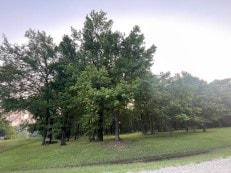
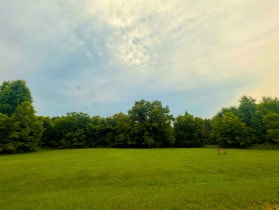
This 5300-acre refuge is remarkable for the quality and variety of wildlife habitats (lake, bottom-land forest, marshland, prairie and mixed pine and hardwood forest), also for their accessibility due to urban location and top-class infrastructure! People access these habitats for enjoyable recreation, nature conservation education and scientific endeavors!
All of this was going on simultaneously yesterday and it was wonderful to be a part of it! There were about twenty different booths/tables set up for educational outreach, refreshments and enjoyment.
The well-subscribed Plein Art Contest had participants fanning out throughout the refuge, setting up easels and producing an array of art works impressive for their speed of production, unique respective charm and diversity of perspective. It was very hard to choose my favorite for the People's Choice Award. The pictures looked very well exhibited together! They all looked great on the show board!
This 5300-acre refuge is remarkable for the quality and variety of wildlife habitats (lake, bottom-land forest, marshland, prairie and mixed pine and hardwood forest), also for their accessibility due to urban location and top-class infrastructure! People access these habitats for enjoyable recreation, nature conservation education and scientific endeavors!
All of this was going on simultaneously yesterday and it was wonderful to be a part of it! There were about twenty different booths/tables set up for educational outreach, refreshments and enjoyment.
The well-subscribed Plein Art Contest had participants fanning out throughout the refuge, setting up easels and producing an array of art works impressive for their speed of production, unique respective charm and diversity of perspective. It was very hard to choose my favorite for the People's Choice Award. The pictures looked very well exhibited together! They all looked great on the show board!
It was a bright and breezy day, and the lake surface was choppy. Though the wind advisory prohibited kayaking/canoeing there was plenty else going on!
Two of the three nature hikes were led by Refuge volunteers: Anirudh Girey, and Kimmie and Charles Paxton, around the ponds and the accessible boardwalks and the pier. Ouachita Green Volunteers in "Love The Boot" T-shirts collected trash as they walked. The groups observed a variety of dragonflies, butterflies, birds including Green and Little Blue Herons, Tree and Barn Swallows (some nesting), American Alligators, Southern Broad-banded Watersnakes and Red-eared Slider turtles.
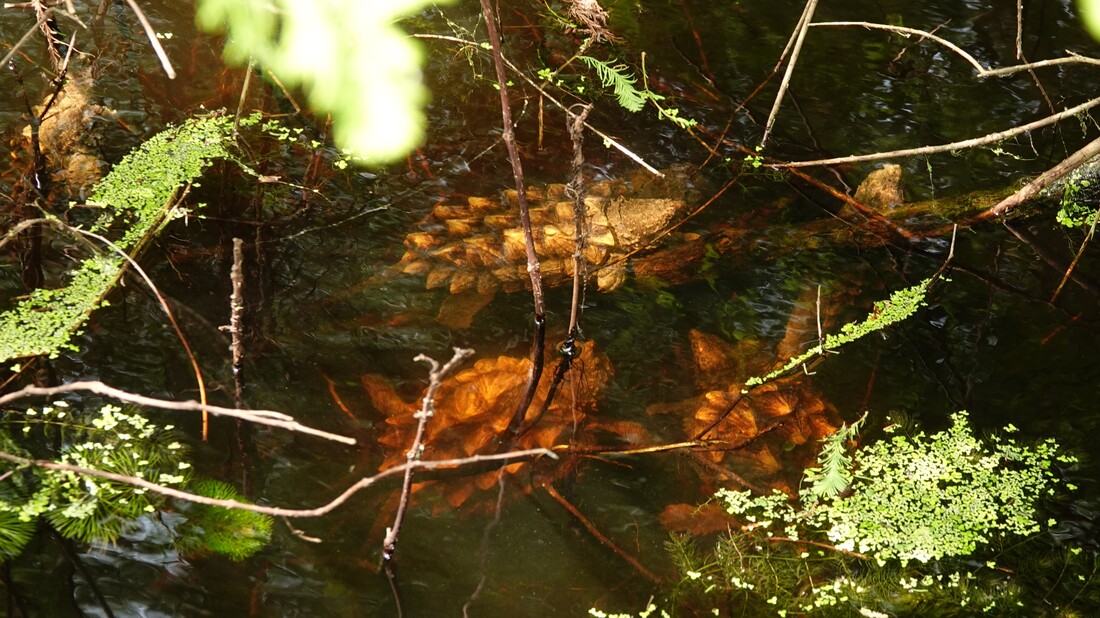
Another hike, led by Ace Intern Jackson Cox focused on birding along The Edgewater Trail, that expedition was enriched by the very rare sighting of a laying female Alligator Snapping Turtle, Macrochelys temminckii. ULM ProfessorEmeritus of Biology, John Carr refers to it as a "Macro".
Two of the three nature hikes were led by Refuge volunteers: Anirudh Girey, and Kimmie and Charles Paxton, around the ponds and the accessible boardwalks and the pier. Ouachita Green Volunteers in "Love The Boot" T-shirts collected trash as they walked. The groups observed a variety of dragonflies, butterflies, birds including Green and Little Blue Herons, Tree and Barn Swallows (some nesting), American Alligators, Southern Broad-banded Watersnakes and Red-eared Slider turtles.
Another hike, led by Ace Intern Jackson Cox focused on birding along The Edgewater Trail, that expedition was enriched by the very rare sighting of a laying female Alligator Snapping Turtle, Macrochelys temminckii. ULM ProfessorEmeritus of Biology, John Carr refers to it as a "Macro".
The first hiking party and passers-by were thrilled to participate in a soul-satisfying turtle release event for the sake of perpetuating the same species of concern! As a culmination of a joint project between the Refuge, ULM Scientists and The Nachitoches National Fish Hatchery, the safe release back into the wild of forty-two Alligator Snapping Turtles is a point of pride! This replenishment of the population helps counter the turtles' biggest threat, nest raiding by raccoons.
I was blessed to join ULM Post-grad Herpetologist, Jess Goodrich and Jackson to catch a glimpse of a nesting female and retreat quickly to avoid putting her off-lay. Jess later returned to collect the eggs for rearing and release. Upon my later return I disturbed a raccoon raid on another Macro's nest and was privileged to stand guard over it until Jess was able to safely collect the remaining eggs for secure, controlled incubation in the ULM Biology Dept.'s incubating facility. Raccoons will return to a nest and take ALL the eggs. They are adept at finding them and are thought to destroy up to 90% of the nests.
I was blessed to join ULM Post-grad Herpetologist, Jess Goodrich and Jackson to catch a glimpse of a nesting female and retreat quickly to avoid putting her off-lay. Jess later returned to collect the eggs for rearing and release. Upon my later return I disturbed a raccoon raid on another Macro's nest and was privileged to stand guard over it until Jess was able to safely collect the remaining eggs for secure, controlled incubation in the ULM Biology Dept.'s incubating facility. Raccoons will return to a nest and take ALL the eggs. They are adept at finding them and are thought to destroy up to 90% of the nests.
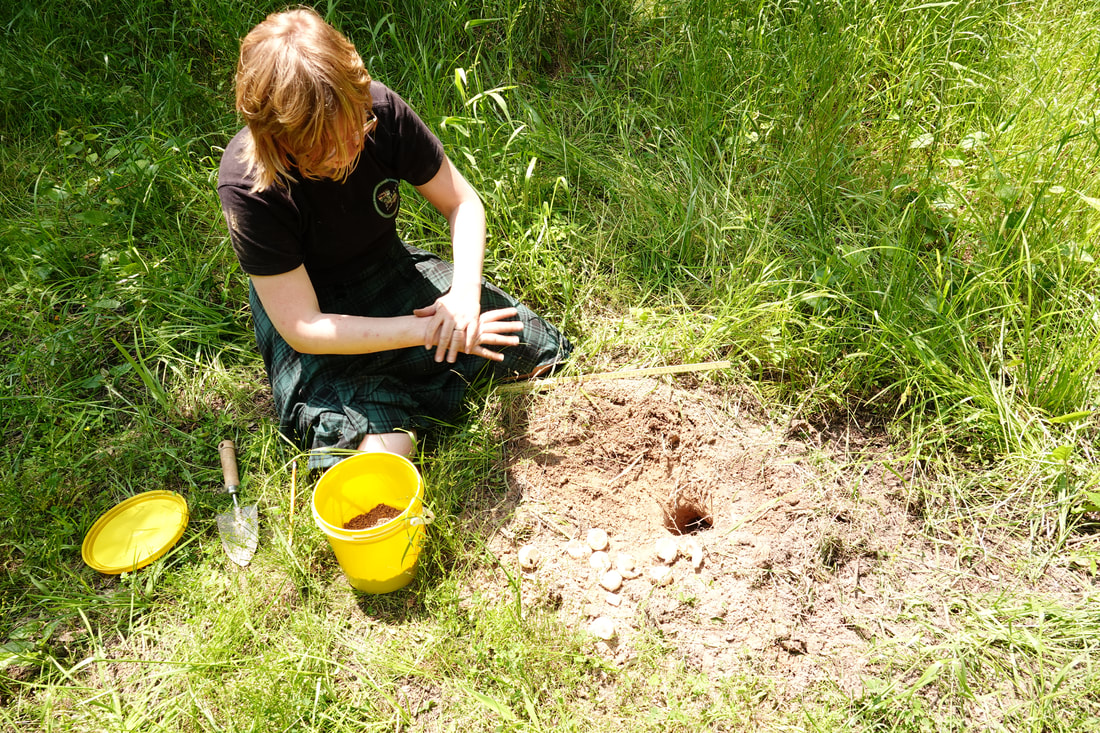
Jess is licensed to handle wildlife, she showed me how to carefully remove eggs, maintaining their original orientation and reset them upright in a basket of sand. Each is spherical, firm, dry and cool. They need to remain so as they can be damaged by excessive heat and can drown if flooded.
Jess works with ULM Prof. Emeritus of Biology John Carr in Internationally important Chelonian Conservation Research. Among other duties she faithfully patrols the refuge to rescue turtle eggs before they can be ruined by predators. The Raccoon's main natural enemies were wolves that no longer hunt them around here.
Among other things, the second walking party observed the released turtles settling into their new home, hanging out among the water weeds in the Cypress swamp! It was wonderful to see them taking their rightful place in the ecosystem.
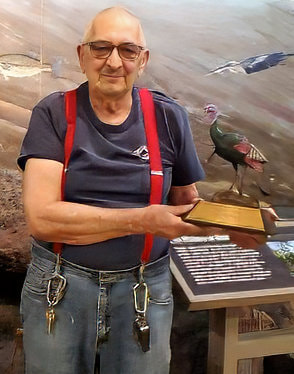
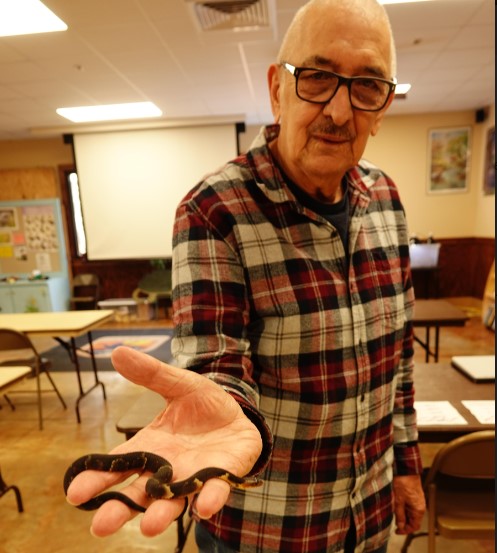
In the Conservation Learning Center, LWF award-winning Conservation Volunteer of the Year, Jim Kolinski, showed visitors reptiles and fish from the lake.
I broke my record with over 14,000 steps recorded on my Charity Miles app. Did you know you can hike for charitable effect? While busy with these things, I'm walking for The Nature Conservancy!
In the Conservation Learning Center, LWF award-winning Conservation Volunteer of the Year, Jim Kolinski, showed visitors reptiles and fish from the lake.
I broke my record with over 14,000 steps recorded on my Charity Miles app. Did you know you can hike for charitable effect? While busy with these things, I'm walking for The Nature Conservancy!
 RSS Feed